How to Build a Personal Emergency Fund When Money Feels Tight
From Moolah Habits · Financial coaching experience and credentials
Start an emergency fund with a realistic first goal, small contributions, and a plan for rebuilding it when life happens.
The Short Answer
Start an emergency fund with a small goal and a contribution you can repeat. Keep it separate from everyday spending, use it for unplanned needs, and make a plan to rebuild it after a withdrawal.
Saving for an emergency sounds sensible until you look at what is left after the regular bills. You may be wondering where this extra savings money is supposed to come from.
We would start by finding one amount you can leave alone until you need it. It might be small. The first goal is to give the next unexpected expense somewhere to land besides a credit card.
Pick a First Target You Can Picture
A large savings goal can feel so far away that it is hard to begin. Choose an initial milestone that would make a difference in your household. What is one smaller expense that would currently throw off your month?
For example, you might choose $250 as a first checkpoint, then reassess. That is an illustration, not a universal emergency fund target. Your eventual reserve should reflect your essential costs, income stability, and responsibilities.
Find an Amount You Can Repeat
Look at the next pay period rather than promising an ambitious monthly transfer. If $15 is available after the bills and necessary spending, start there. At $15 a week, you would set aside $150 over ten weeks, before any interest.
You could add money from selling something you no longer use or another occasional source. Count it when it arrives. A plan that depends on money you might receive can leave you short.
Give the Money a Clear Purpose
Keep the reserve safe and accessible, with enough separation from everyday spending that you can identify it. Check account fees and balance requirements before opening anything new.
Decide what would justify using it. A surprise repair that keeps you getting to work may qualify. An annual membership you knew was renewing belongs in the regular plan. Clear guidelines make the decision easier when you are already stressed.
Adjust When the Budget Has No Room
If essentials are already more than your income, a savings transfer could create an overdraft. Work on that gap first. Review bill timing, larger costs, and available support instead of repeatedly moving money into savings and pulling it straight back.
When you do need the emergency money, use it for its purpose and make a rebuilding plan.
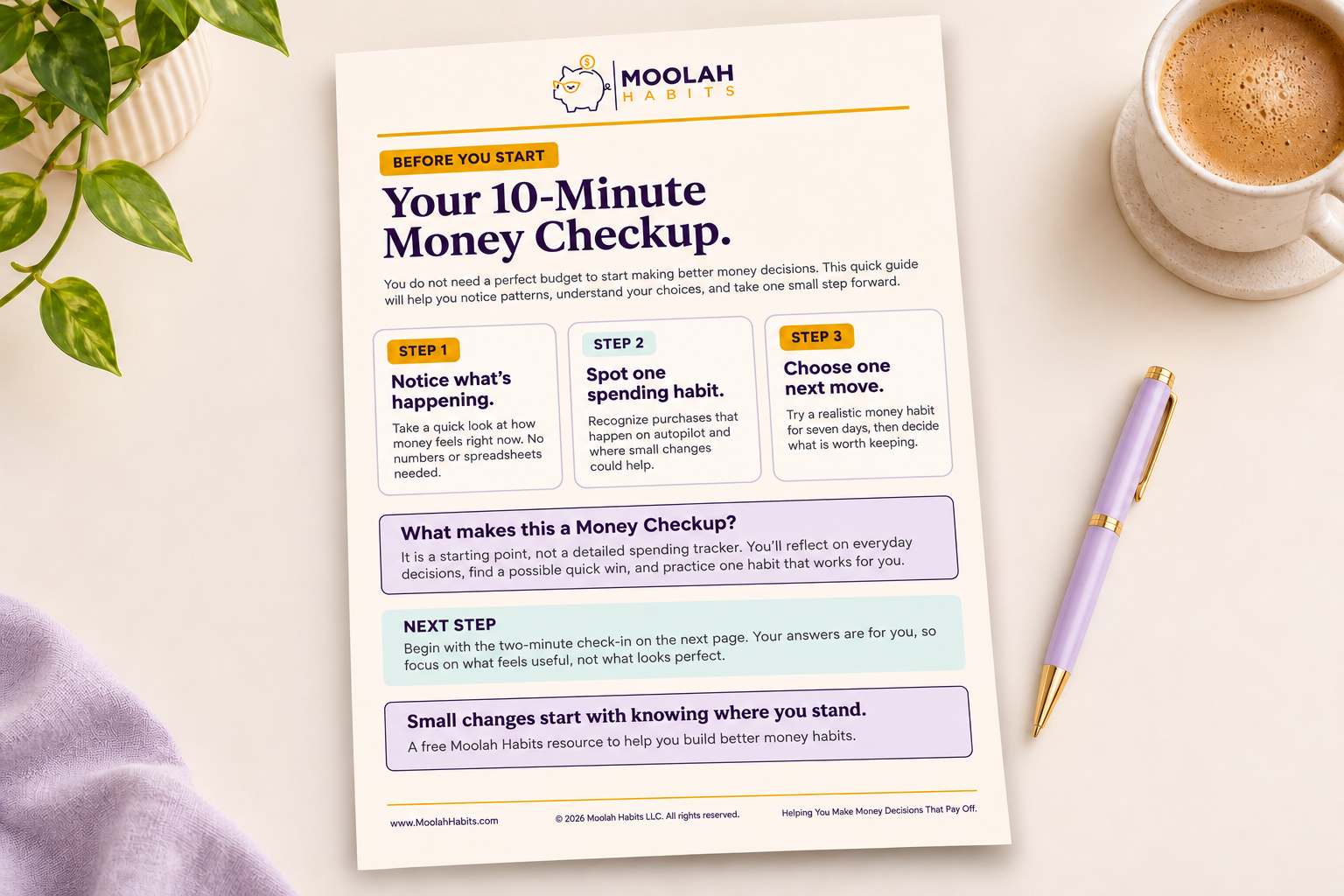
For a simple place to start, get the free 10-Minute Money Checkup using the form below. It helps you notice your money habits and choose one small next step.
Sources & Further Information
- CFPB: An essential guide to building an emergency fund
Background on setting aside money for unplanned expenses and choosing a savings goal that fits your situation.