Pay Off Personal Debt or Build Savings? How to Choose Your Next Step
From Moolah Habits · Financial coaching experience and credentials
Decide how to balance debt payments and savings by looking at essentials, a cash buffer, interest costs, and the expenses coming next.

The Short Answer
The balance between debt payoff and savings depends on essential bills, minimum payments, your cash buffer, interest costs, and upcoming expenses. Review those needs together before deciding where the next extra dollar should go.
You have a little money available and two good reasons to use it. Paying down debt would feel like progress. Keeping cash would make the next surprise less stressful.
We would look at the situation around that money before choosing. The next step needs to help you keep moving without putting the same expense back on a card.
Cover the Obligations That Cannot Wait
Start with essentials and required payments. If housing, utilities, transportation to work, or minimum debt payments are at risk, address those immediate needs first. Contact the relevant provider or creditor early if a payment will be difficult.
This is different from deciding where to put extra money. A plan that accelerates one debt while falling behind on another obligation can create new problems.
Check What Happens If a Surprise Arrives
If you have no accessible savings, consider the effect of sending every available dollar to debt. Would a modest repair force you to borrow again? An initial cash buffer may help interrupt that cycle.
For example, imagine you have $500 available and a car you depend on for work. Keeping some cash and using some toward debt may be more sustainable than emptying the account. The appropriate split depends on your bills, existing reserves, and risks. There is no universal amount that fits every household.
Separate an Emergency From a Known Bill
An expense due soon deserves a place in the decision. If you know you need $300 for a required annual bill next month, that money is already committed. Paying it toward a card now and borrowing it again later may only move the problem.
Once those near-term needs are covered, choose how you will direct extra debt payments. The highest-interest method targets the most expensive debt first. The snowball method starts with the smallest balance for earlier payoffs. Continue required payments on the others under either approach.
Choose a Sequence You Can Keep Using
A practical sequence might be catching up on immediate obligations, building an initial reserve, and then directing a repeatable amount toward a selected debt. Revisit the plan when income or circumstances change.
If minimum payments are unaffordable, speak with creditors or a reputable nonprofit credit counselor about your options. That needs more than a different savings split.
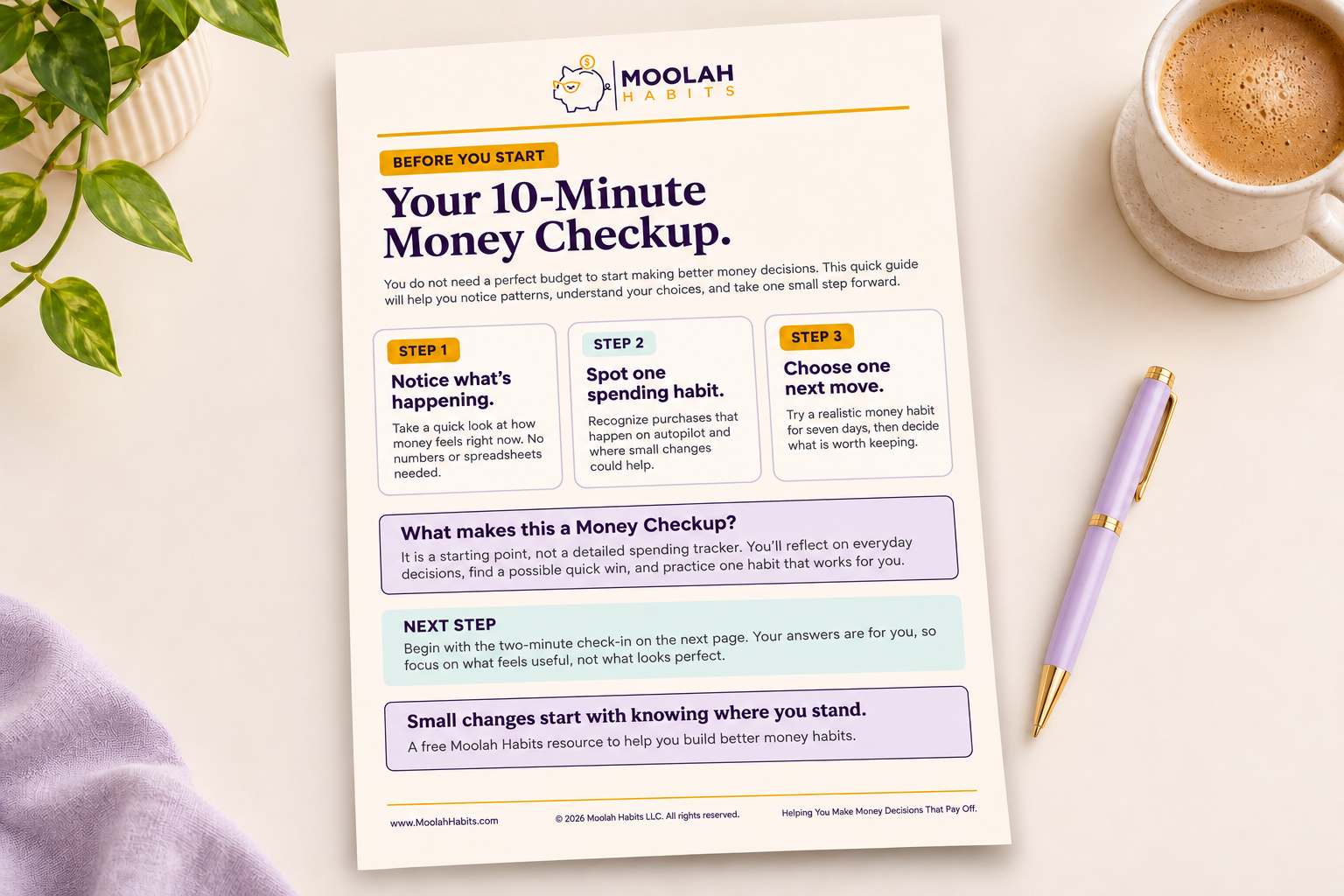
For a simple place to start, get the free 10-Minute Money Checkup using the form below. It helps you notice your money habits and choose one small next step.
Sources & Further Information
- CFPB: An essential guide to building an emergency fund
Background on setting aside money for unplanned expenses and choosing a savings goal that fits your situation.