The Money Date: A Simple Way for Couples to Get on the Same Page
From Moolah Habits · Financial coaching experience and credentials
Plan a money date without the blame. Use four practical questions to review bills, discuss shared goals, and decide your next steps as a couple.

The Short Answer
A money date is a planned conversation about shared finances. Review what went well, what expenses are coming, which decisions need attention, and who will take each next step, without turning spending differences into blame.
“We need to talk about money” can sound like the start of an argument. One person may expect a list of things they did wrong. The other may be worried about a bill that’s been sitting in their head all week. Neither person is looking forward to that conversation.
What Is a Money Date
We’d rather call it a money date. It’s time you choose to sit down together, look at what’s happening, and make a few decisions. You could do it over coffee at home or after dinner. It doesn’t require the two of you to think about money in exactly the same way.
How to Plan a Money Date
Start with 20 to 30 minutes. Pick a time when you’re both reasonably rested and not racing out the door. Bring the numbers you need: upcoming bills, account balances, recent spending, and any large expenses on the horizon. You don’t need to review every transaction together unless that’s what you’ve agreed to do. Make the setting comfortable enough that you’ll actually want to do it again.
Four Money Date Questions to Ask
Try these four questions:
- What went well since we last talked? Start with progress, even if it seems small.
- What is coming up before our next money date? Think school costs, travel, repairs, renewals, and anything that could change the plan.
- What decision do we need to make together? Pick one or two. Trying to solve every money question at once usually makes the conversation harder.
- Who is doing what next? Decide who will check a balance, get a quote, move money, or follow up, and when.
Make Room for Different Money Habits
If one of you loves spreadsheets and the other does not, make room for both styles. The spreadsheet person can bring the facts. The other person may be the one who asks whether the plan will actually work in real life. Both perspectives matter.
Keep Money Conversations Constructive
You can also agree on a pause rule. If the conversation gets heated, stop and come back at a specific time. A money date works better when both people can speak honestly without worrying that one unexpected expense will become a character judgment.
Over time, the goal is less surprise and more teamwork. You may still disagree about what matters most. At least you’ll be deciding together with the same information.
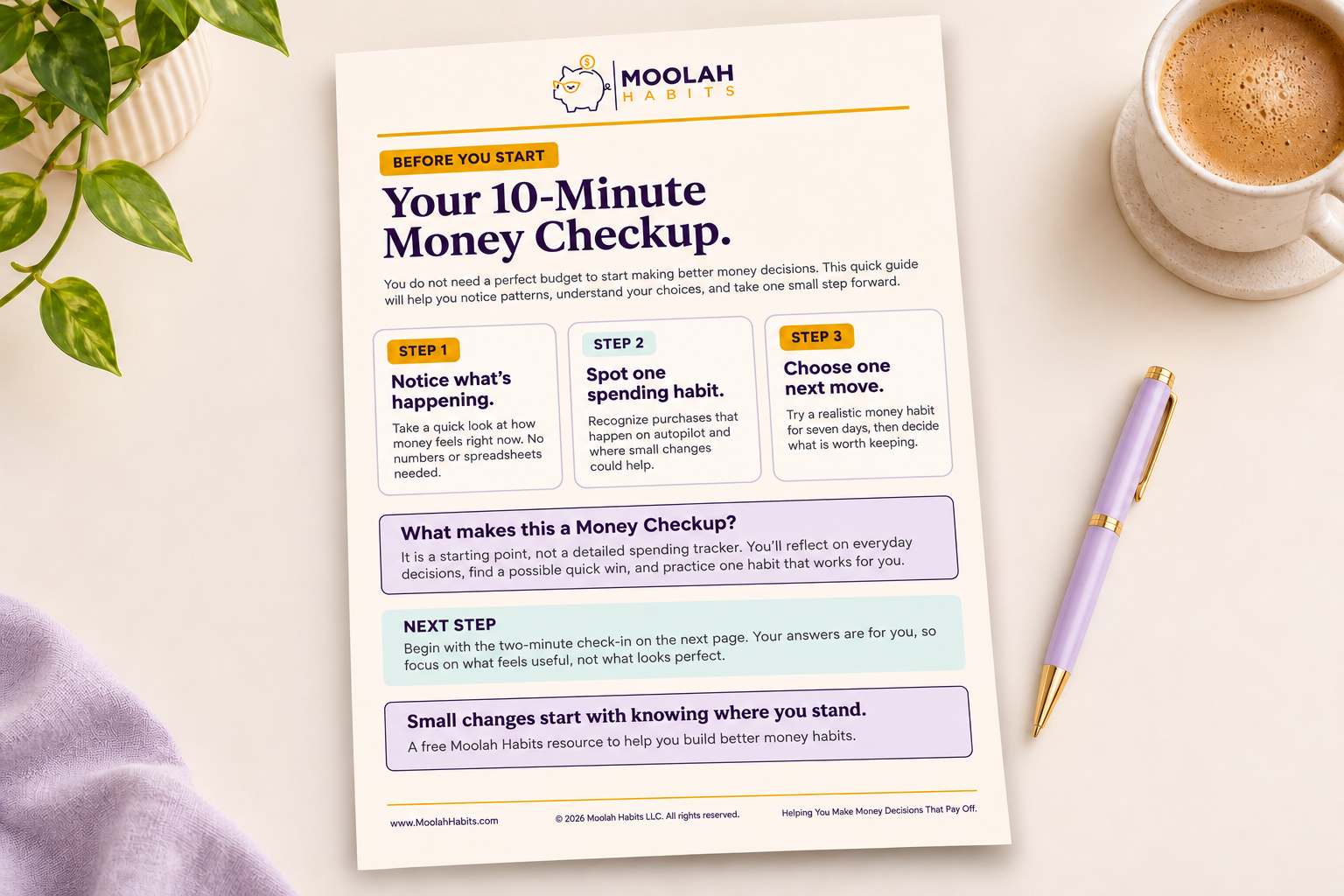
For a simple place to start, get the free 10-Minute Money Checkup using the form below. It helps you notice your money habits and choose one small next step.