Where Did the Money Go? A First Step When Your Finances Feel Unclear
From Moolah Habits · Financial coaching experience and credentials
Find out where your money went with a simple monthly spending review. Sort expenses, spot patterns, and choose one realistic change without the guilt.

The Short Answer
To find where your money went, review one month of bank and card transactions and group them into useful categories. Separate regular costs from irregular expenses, notice patterns, and choose one manageable adjustment.
Sometimes the hardest part of looking at your money is simply starting. You have a general idea of what you earn and what the big bills cost, but the balance at the end of the month never seems to match what you expected.
Start with One Month of Personal Spending
Your first step does not have to be a new budget. Start by looking backward at one ordinary month. Open your bank and card statements and gather everything in one place. Include the accounts you use most often, even if it feels messy.
Group Your Expenses Into Useful Categories
Sort the spending into a handful of useful groups: housing and utilities, groceries and household needs, transportation, debt payments, subscriptions, eating out and entertainment, and everything else. Change the groups if your life calls for it. The point is to see patterns, not to build the perfect chart.
Separate Regular Expenses From Surprises
As you go, mark three kinds of spending:
- Expected: bills and purchases you knew were coming.
- Irregular but predictable: things like car repairs, gifts, school costs, or annual renewals. They don’t happen every month, but they’re part of life.
- Surprising: charges you forgot about, amounts larger than expected, or choices you want to revisit.
Look for Patterns without Judging Yourself
Now ask: Which numbers surprised me? Where did timing cause a problem? Was money meant for one goal used for something else? Is there an expense I’m happy to keep because it matters to me?
That last question matters. The exercise isn’t about finding something to feel guilty about. Maybe a weekly dinner out gives your family breathing room. Maybe an unused subscription does nothing for you. Those are different decisions, even if both sit under “extras” in a budget app.
Choose One Spending Change to Try
Choose one adjustment you can try for the next month. It might be setting money aside for an irregular bill, moving a payment date, canceling something you no longer use, or deciding on an amount for a spending category. Then look again. One useful change beats a complicated plan you abandon after a week.
Clarity comes before control. Once you know where the money went, you can decide where you want it to go next.
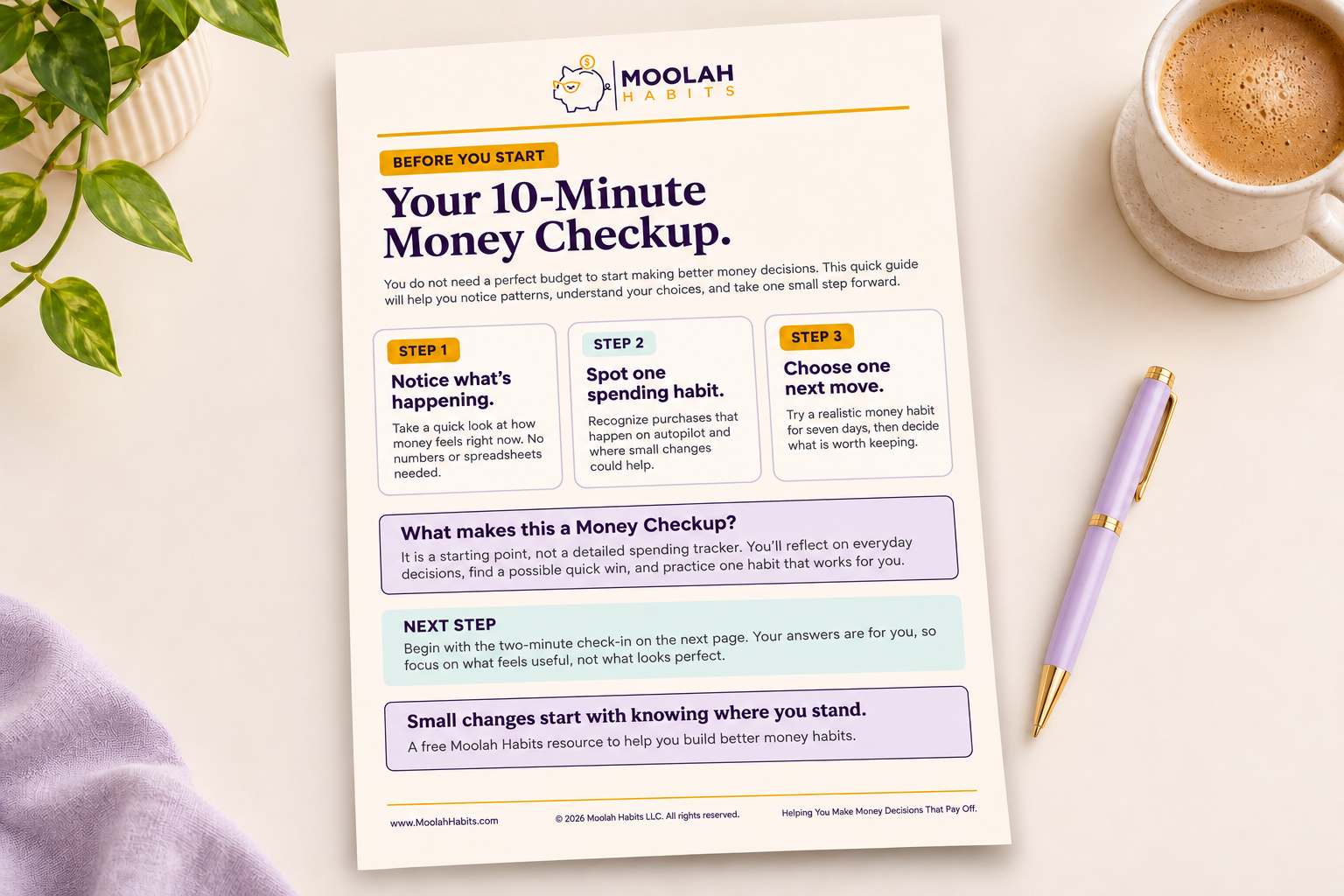
For a simple place to start, get the free 10-Minute Money Checkup using the form below. It helps you notice your money habits and choose one small next step.