Can You Afford It or Just the Payment?
From Moolah Habits · Financial coaching experience and credentials
A low monthly payment can make a purchase feel affordable, but the total cost and impact on your budget still matter. Learn how to spot the payment trap before it stretches your finances.

The Short Answer
An affordable payment does not automatically mean an affordable purchase. Compare the full cost, fees, repayment period, and effect on savings and upcoming expenses before adding another monthly obligation.
A low monthly payment can make almost anything feel affordable.
A new phone for $42 a month. Furniture for $89 a month. A car upgrade for only a few hundred more. A buy-now-pay-later purchase split into four easy payments.
The payment itself may fit. But that does not always mean the purchase actually fits your budget.
The better question is not just, ‘Can I make this payment?’ It is: ‘What does this purchase do to the rest of my money?’
A Low Monthly Payment Can Feel Harmless
Monthly payments are designed to make larger purchases feel smaller.
Instead of thinking about the full price, your attention shifts to one manageable number. $60 a month feels very different from $1,440. $150 a month feels very different from $5,400.
The problem is that the payment does not disappear after the purchase. It becomes part of your budget, month after month.
The Total Cost Still Matters
When you are deciding whether something is affordable, look beyond the monthly payment.
Consider the full purchase price, interest, fees, how long you will be making payments, whether the payment changes over time, whether there are penalties for paying late, and what else you are giving up in order to make the payment.
A $75 monthly payment over 24 months is $1,800. If the financed total is higher because of interest or fees, the real cost is even more.
More Payments Mean Less Room in Your Budget
One payment may feel manageable. Then another gets added. Then another. Eventually, your future paychecks are already committed before they arrive.
Example:
- Car payment: $500
- Phone payment: $45
- Furniture payment: $90
- Buy-now-pay-later: $80
- Subscription bundle: $40
That is $755 every month already assigned before groceries, utilities, savings, gas, or anything unexpected happens.
Each individual payment might have seemed reasonable. Together, they can make the budget feel tight.
A Payment Can Fit Today and Still Create Stress Later
Something can technically fit in your budget and still make the next few months harder.
Before adding another payment, think about whether you will still have room for emergency savings, car repairs, medical expenses, holidays and birthdays, school expenses, travel, home repairs, debt payoff, higher utility bills, or a change in income.
A budget with no breathing room can feel fine until something unexpected happens.
Try the Cash Question
One simple way to slow down a financing decision is to ask: Would I still buy this if I had to pay cash?
That does not mean you should never finance anything. It is simply a way to separate the value of the purchase from the convenience of the payment plan.
You can also ask whether you would still want it at the full price, whether the payment fits comfortably or just barely, what you will have less money for because of it, how long the payment will follow you, and whether you are solving a real need or reacting to an easy payment option.
When Financing Can Make Sense
The point is not that every monthly payment is bad. Financing can make sense when it is intentional and fits comfortably within your overall financial plan.
Before saying yes, understand the full cost, payment amount, payoff timeline, interest rate, fees, and effect on your monthly budget.
Create More Room Before Adding Another Payment
If your budget already feels tight, adding another monthly obligation can make it even harder to create flexibility.
Before taking on a new payment, add up your recurring payments and ask: How much of my income is already spoken for before the month begins?
Sometimes the goal is not to cut everything. It is simply to stop stacking new obligations on top of old ones.
The Takeaway
A low monthly payment can make a purchase feel affordable. But the payment is only one part of the decision.
The total cost matters. Your future budget matters. Your financial breathing room matters.
Before adding another monthly payment, look past the small number and ask whether the purchase truly fits your money. And when you are unsure, use the cash question: Would I still buy this if I had to pay cash?
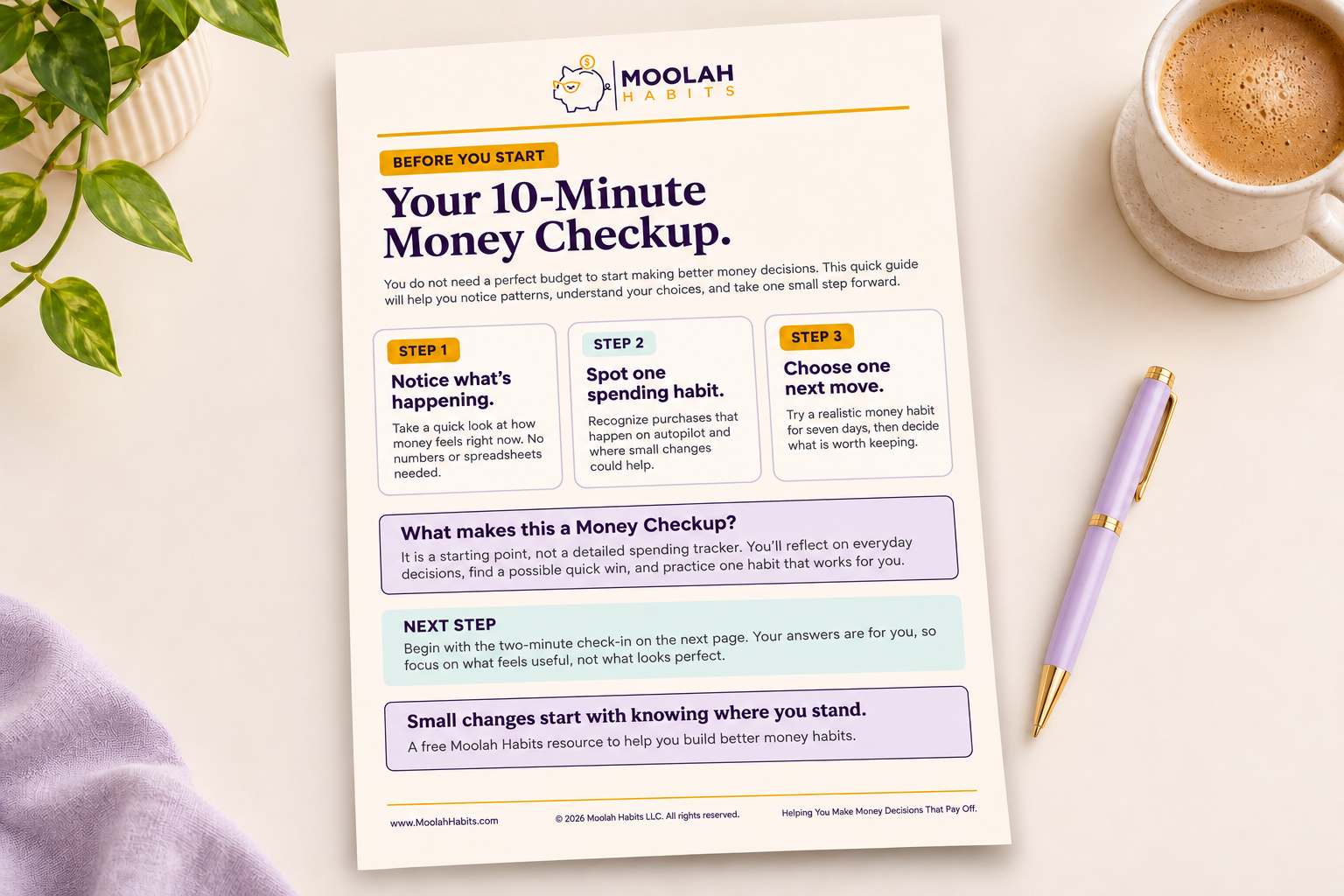
For a simple place to start, get the free 10-Minute Money Checkup using the form below. It helps you notice your money habits and choose one small next step.