How Couples Can Manage Personal Finances When One Partner Earns More
From Moolah Habits · Financial coaching experience and credentials
Talk through shared costs when incomes differ. Compare contribution approaches, account for unpaid work, and agree on decisions together.

The Short Answer
Couples with different incomes can agree on contributions based on their household needs and priorities. Compare equal-dollar and income-based approaches, recognize unpaid work, and decide together how shared spending and personal money will work.
Splitting everything in half sounds simple. It can feel very different when one person earns much more than the other. The same bill may leave one partner comfortable and the other with almost nothing.
A useful starting point is deciding what you want the arrangement to accomplish. Covering shared costs matters. So do each person’s responsibilities, access to money, and ability to take part in decisions.
Agree on What Counts as Shared
List housing, utilities, groceries, childcare, and other costs you both consider household expenses. Discuss debt payments, savings goals, and costs that stay personal. Assumptions can create friction even when both people think they are being reasonable.
Include unpaid work in the conversation. Caring for children, managing a household, or supporting a partner’s career can affect earning capacity. Take-home pay does not measure every contribution.
Compare Contribution Methods with Real Numbers
Some couples pool income. Others contribute in proportion to earnings, use equal amounts, or agree on another arrangement. Work through what each option leaves available rather than choosing a label first.
Suppose one partner takes home $4,000 a month and the other takes home $2,000. With $3,000 in shared expenses, a proportional split would be $2,000 and $1,000. An equal split would be $1,500 each. Neither calculation decides what is fair for your household; it shows the effect so you can discuss it.
Decide How Choices Will Be Made
Agree on which purchases need a joint conversation and how each person can access the information needed to participate. A higher paycheck should not automatically turn into a larger vote on shared decisions.
You may also want an agreed amount for individual spending. Discuss whether the approach lets both people have reasonable autonomy, especially when one person reduces paid work for household responsibilities.
Revisit the Arrangement When Life Changes
A job change, parental leave, new debt obligation, or fluctuating income can make an old arrangement stop working. Set a regular check-in so neither person has to wait until they are frustrated to raise the issue.
Separate account arrangements do not by themselves determine legal ownership or rights. Get qualified advice when that is part of the question.
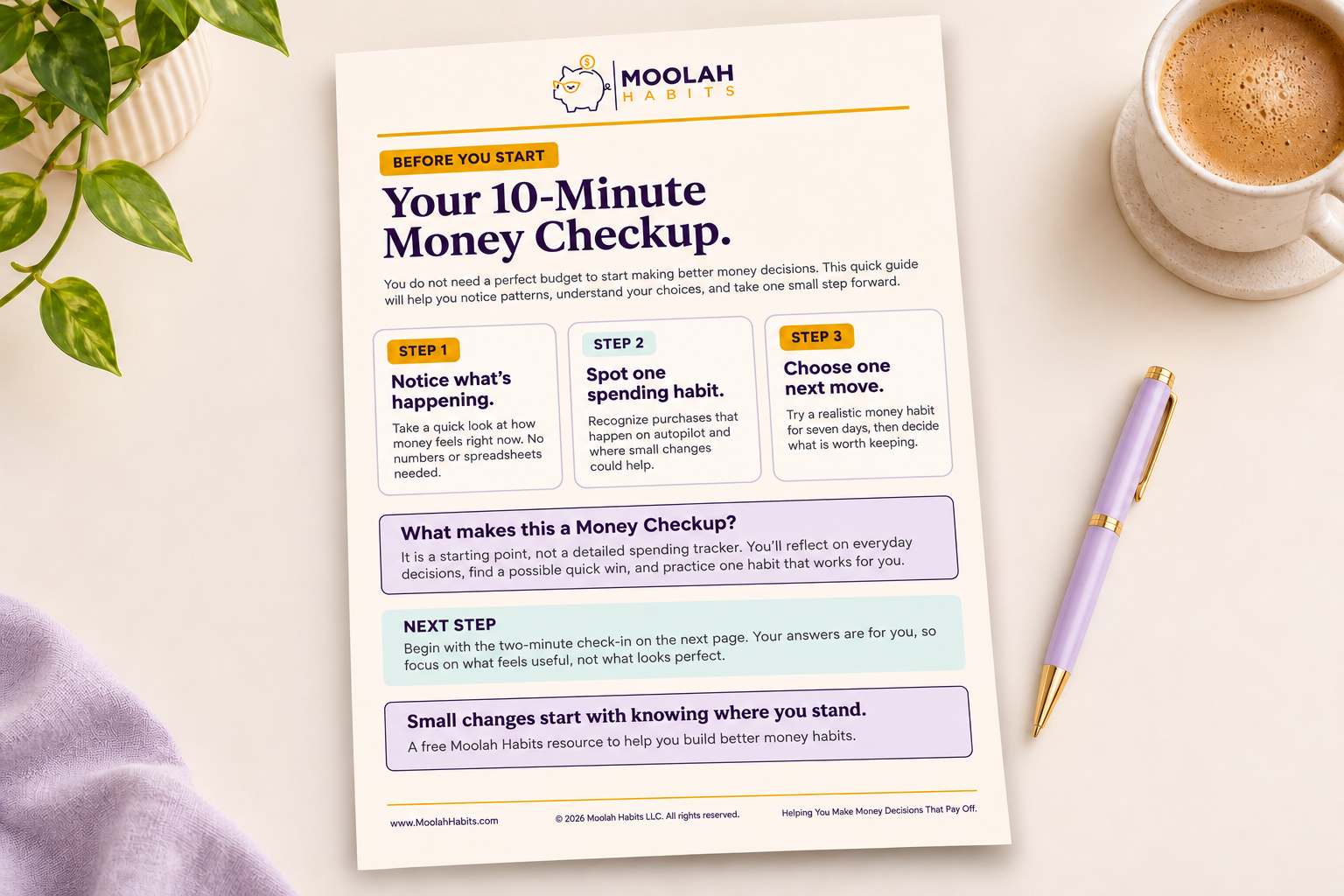
For a simple place to start, get the free 10-Minute Money Checkup using the form below. It helps you notice your money habits and choose one small next step.