Your Personal Budget Needs a Reset, Not a Guilt Trip
From Moolah Habits · Financial coaching experience and credentials
If your budget keeps falling apart, the problem may be the plan—not you. Learn how to reset your personal budget around real life and make the next money decision clearer.

The Short Answer
Reset a budget by comparing the plan with actual spending and updating it for current bills, irregular expenses, and priorities. Choose one realistic adjustment and check the results instead of expecting every month to look the same.
You made a budget. Then groceries cost more than you expected, the kids needed something for school, and dinner came from a drive-through more often than the plan allowed. By the third week, you stopped looking at it.
Before you decide you are bad with money, take another look at the plan. Does it reflect the life you are actually living? A budget built around your most organized, least expensive month is going to need some adjustments.
Start with What Happened
Pull up your recent bank and credit card statements. Look at what you spent on groceries, transportation, meals, and the bills that keep showing up. Include purchases made with cash if you can.
Try to approach the numbers with curiosity. If you planned $500 for groceries and spent $700, what explains the difference? Higher prices? More people eating at home? A few extra store trips? The answer helps you decide what to change. Calling yourself irresponsible does not.
Make the Plan Fit Your Income
Giving a category a more realistic number does mean something else may need to move. If groceries need another $100, decide where that money will come from before you spend it. You might reduce restaurant spending, postpone a purchase, or adjust a savings goal for the month.
If essential bills already use up your income, moving numbers between categories will only go so far. That calls for a closer look at larger costs, income, and the help available to you. It is not a problem you can fix by finding a cheaper coffee.
Leave Room for an Ordinary Busy Week
A plan that assumes you will cook every meal from scratch may fall apart the first time work runs late. Give yourself a realistic option for those evenings. That might mean easy freezer meals, a smaller takeout allowance, or both.
Set a short weekly check-in, too. Look at what is left, what is coming up, and which category needs attention. Ten minutes now can prevent an end-of-month surprise.
Choose One Change for This Week
You do not need to rebuild your entire financial life tonight. Update one unrealistic category and decide how you will cover it. Then check whether the change helped.
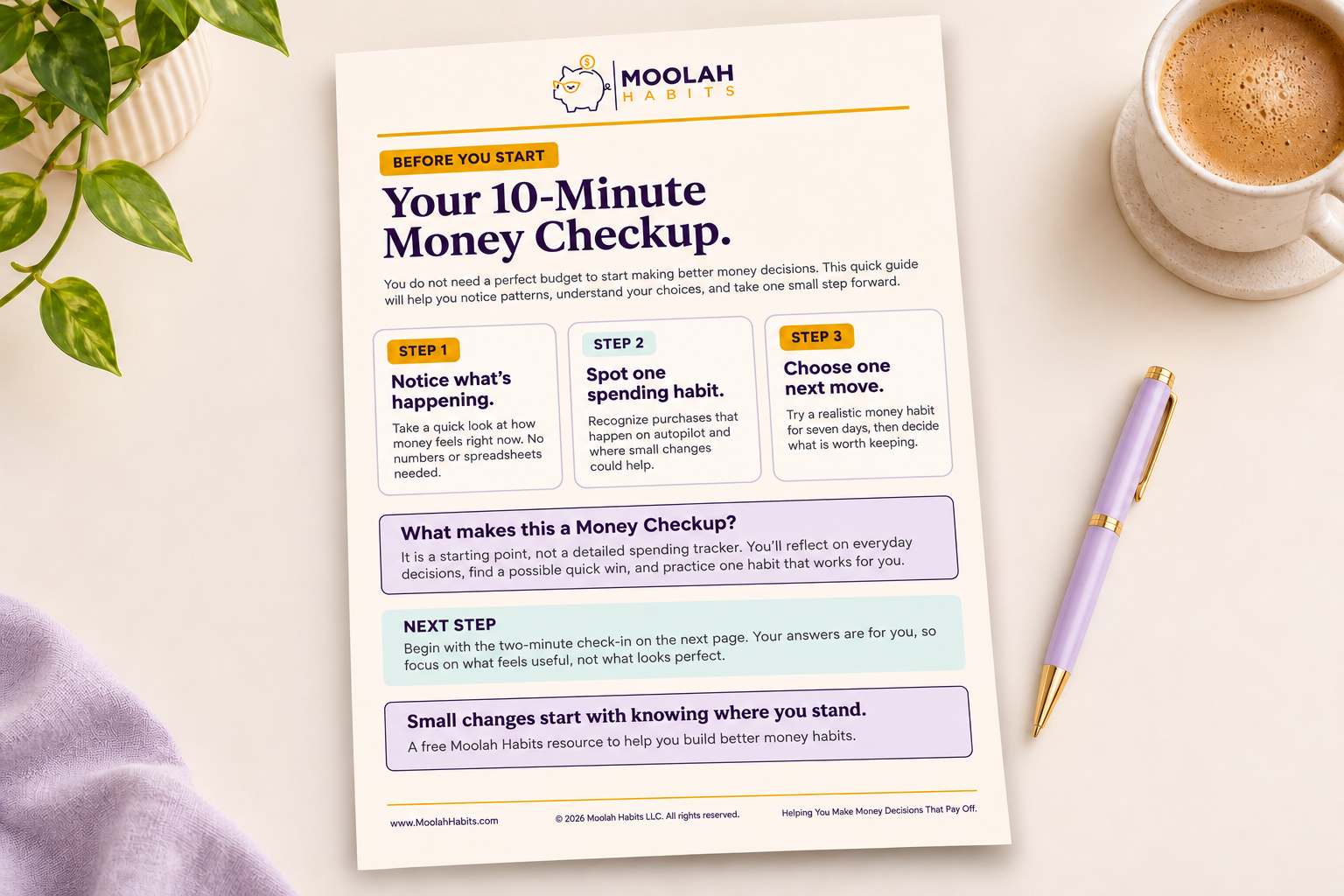
For a simple place to start, get the free 10-Minute Money Checkup using the form below. It helps you notice your money habits and choose one small next step.