Where Did the Money Go? The Small Spending Habits That Add Up
From Moolah Habits · Financial coaching experience and credentials
Wondering where your money went? Small spending habits like takeout, quick store runs, subscriptions, and online purchases can add up fast. Learn how to spot the pattern before changing your budget.
The Short Answer
Small purchases become a budget problem when their combined cost exceeds what you planned. Review takeout, store runs, subscriptions, and online orders together, then choose one spending habit to change.
You check your account and think: Where did the money go?
There was no huge shopping spree. No major emergency. No giant purchase you forgot about. But somehow, there is a lot less money left than you expected.
Sometimes the answer is not one big expense. It is a bunch of small ones that were easy to overlook: takeout, quick store runs, subscriptions, and a few online purchases.
Each one may seem harmless on its own. Together, they can quietly take up a much bigger part of your budget.
It Usually Is Not One Big Purchase
When people think about overspending, it is easy to picture a major purchase. But everyday spending can be harder to notice because it happens in smaller amounts.
You might spend $15 on lunch, $8 at a convenience store, $12 on something online, $10 on a subscription, and $20 during a quick Target run. None feels huge, but that is already $65.
The problem is not necessarily that any one of those purchases was bad. The problem is how easy it is to lose track of them when they happen throughout the week.
Takeout Can Add Up Quickly
Takeout is one of those expenses that can feel completely reasonable in the moment. You are tired, the day ran late, or there is nothing ready for dinner.
For example: $28 takeout on Tuesday, $34 dinner on Friday, and $18 lunch over the weekend. That is $80.
This does not mean takeout has to disappear from your life. It just helps to know how much of your money is going toward it.
Quick Store Runs Rarely Stay Quick
You stop at the store for one thing. Then you grab a drink, a snack, something the kids need, something on sale, and maybe one thing you forgot you wanted.
A $10 trip turns into $35. Frequent small trips can make spending harder to track.
Sometimes fewer, more intentional shopping trips can make it easier to see what is actually being spent.
Subscriptions Can Become Background Spending
Subscriptions are especially easy to forget because many of them happen automatically: streaming services, apps, cloud storage, memberships, delivery services, and software.
Individually, $7, $10, or $15 may not seem like much. But several subscriptions together can become a meaningful monthly expense.
It is worth checking your statements occasionally and asking: Do I still use this enough to keep paying for it?
Small Online Purchases Feel Different
Online shopping makes it incredibly easy to spend without feeling like you are spending. A few taps and the purchase is done.
A $9 item here and a $17 item there can quickly become real money.
One of the easiest habits to try is simply creating a little space between seeing something and buying it. Even waiting until the next day can help you decide whether you actually want it.
Do Not Change Anything yet
If you feel like money keeps disappearing, your first step does not have to be cutting everything.
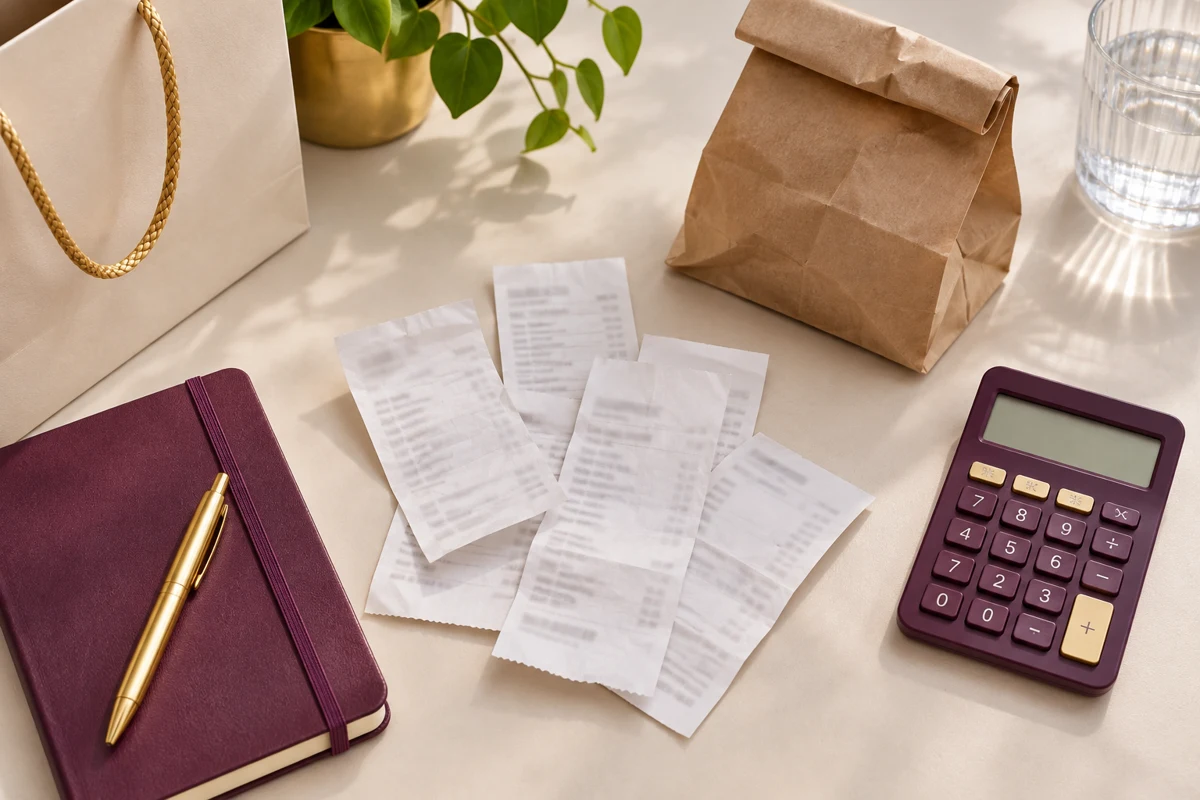
Try something much simpler: track the small stuff for one week. Write down every takeout purchase, coffee or snack, quick store run, online order, subscription charge, convenience purchase, and small impulse buy.
Do not judge it. Do not immediately try to fix it. Just track it. At the end of the week, total it up.
Look for Patterns
Once you have one week of spending in front of you, ask which purchases happened most often, which ones surprised you, whether one category was much higher than expected, which purchases were worth it, which ones you would skip next time, and whether convenience was driving most of the spending.
You may find that you do not need a completely new budget. You may just need to adjust one or two habits.
Awareness Comes Before Change
One of the biggest mistakes with budgeting is trying to fix everything before understanding what is happening.
If you do not know where the money is going, it is hard to make a realistic plan. Tracking gives you clarity, and clarity makes the next decision easier.
The Takeaway
When you wonder where your money went, do not immediately assume there is one big problem.
Look at the small stuff: takeout, quick store runs, subscriptions, online purchases, and everyday spending.
Track it for one week before changing anything. You may be surprised by what you find.
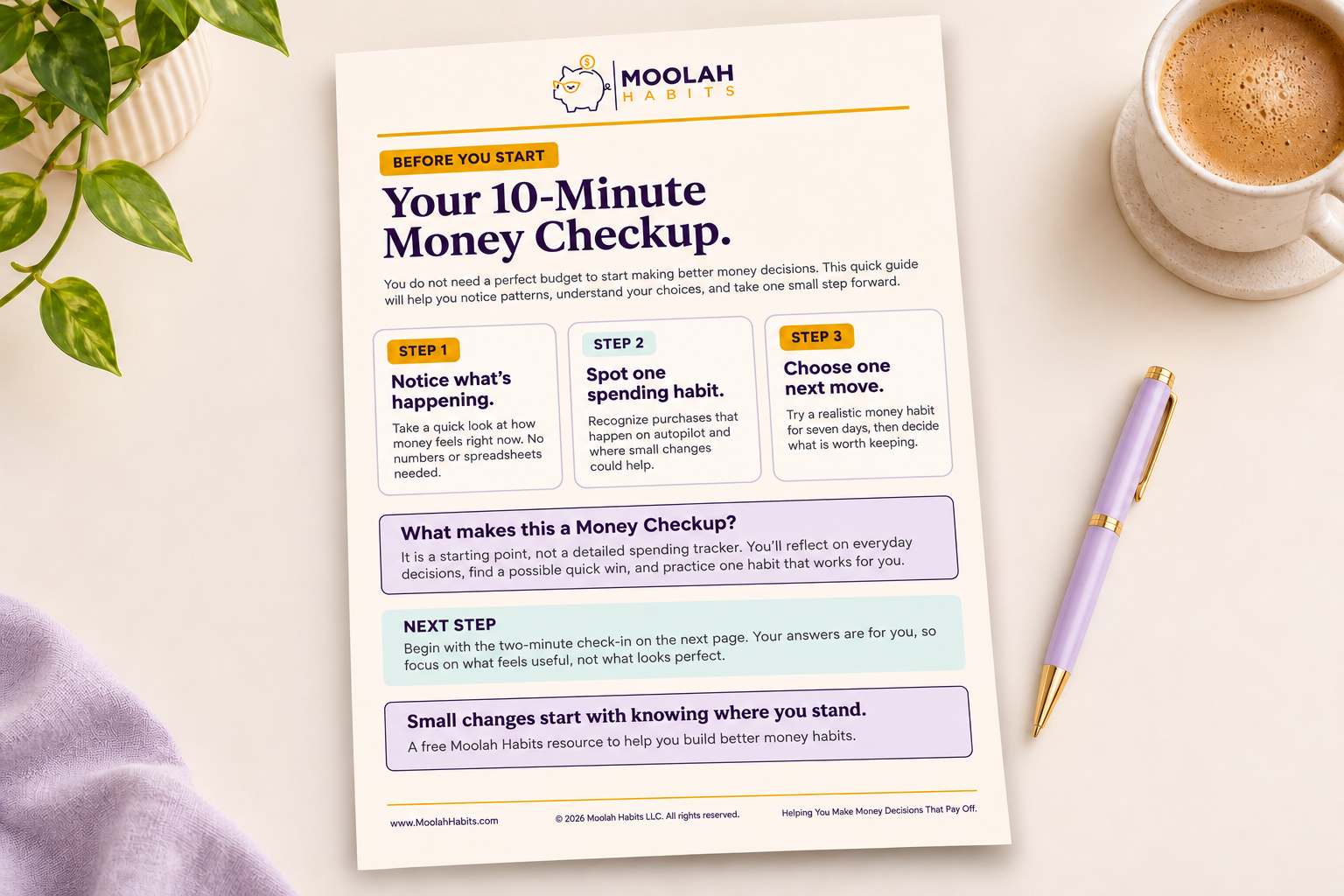
For a simple place to start, get the free 10-Minute Money Checkup using the form below. It helps you notice your money habits and choose one small next step.